
Content & Organic Growth
Organic Attention and Duplicating Yourself With AI

Learn how Deven Seenath uses organic content to capture attention at scale, then combines AI, SOPs, transcripts, and institutional knowledge to create a second brain that helps his team operate without constantly relying on him.
Session Overview
Deven Seenath breaks down two powerful systems he uses to scale his businesses: organic attention and AI-powered knowledge transfer. First, he explains how businesses can use short-form organic content to reach highly targeted audiences without relying entirely on paid advertising — researching what already works, replicating proven formats, and adapting those ideas for a specific market. He also explains the two metrics he watches closely in short-form content: the ability to stop someone from scrolling in the first few seconds and the ability to keep that viewer watching. The second half tackles a different growth problem: the founder becoming the bottleneck. Deven explains how he created an AI-powered second brain using years of conversations, coaching calls, SOPs, messages, and Loom recordings, allowing his accumulated expertise to become an operational asset for the company. The larger lesson is not simply to use AI to create more content — it is to capture what you know, structure it, and make that knowledge available to the people and systems running the business.
Key Takeaways
- Attention comes before the sale. A customer has to know you exist before they can buy from you. Deven treats attention as a business asset that can eventually become leads, sales, appointments, advertising revenue, or other outcomes.
- Organic content can keep producing after publication. Paid advertising generally requires continued spending to continue generating traffic. Organic content can continue receiving views after it has been published, which makes content another acquisition channel businesses can build over time.
- Research first, creativity second. Deven calls his approach Replicate and Reproduce. Instead of starting every piece of content from scratch, identify ideas and formats already performing well and adapt the underlying concept to your own audience.
- Short-form content depends heavily on two things. Swipe Ratio — does the opening stop someone from scrolling? Retention — does the video keep them watching? The first few seconds and continued viewer attention heavily influence how far short-form content gets distributed.
- The founder can become the bottleneck. As Deven's organizations grew, managers and employees still brought unusual questions back to him. More employees did not automatically solve the problem because the specialized knowledge still lived primarily inside his head. The problem was not simply staffing — it was knowledge access.
Transcript
Full searchable transcript of this session. Read along or jump to any moment with timestamped paragraphs.
All Key Takeaways
Attention comes before the sale
A customer has to know you exist before they can buy from you. Deven treats attention as a business asset that can eventually become leads, sales, appointments, advertising revenue, or other outcomes.
Organic content can keep producing after publication
Paid advertising generally requires continued spending to continue generating traffic. Organic content can continue receiving views after it has been published, which makes content another acquisition channel businesses can build over time.
Research first, creativity second
Deven calls his approach Replicate and Reproduce. Instead of starting every piece of content from scratch, identify ideas and formats already performing well and adapt the underlying concept to your own audience.
Short-form content depends heavily on two things
Swipe Ratio — does the opening stop someone from scrolling? Retention — does the video keep them watching? The first few seconds and continued viewer attention heavily influence how far short-form content gets distributed.
The founder can become the bottleneck
As Deven's organizations grew, managers and employees still brought unusual questions back to him. More employees did not automatically solve the problem because the specialized knowledge still lived primarily inside his head. The problem was not simply staffing — it was knowledge access.
Capture institutional knowledge
Deven began collecting information from coaching calls, employee conversations, SOPs, messages, emails, Loom recordings, training calls, past questions and answers, and operating knowledge. That information became training material for an AI knowledge system.
Build an AI second brain
Deven describes creating a knowledge system containing millions of information nodes based on years of business knowledge. His managers can ask it questions and receive answers based on the information he previously created or communicated. The goal is AI that understands how the business operates.
Let the team ask AI before asking the founder
Deven gave managers access to the second brain and instructed them to consult it before escalating questions to him. If the AI provides a correct answer, the employee moves forward. If it gets something wrong, the correction becomes new knowledge that improves the system.
Start collecting knowledge now
Deven's practical recommendation is not to wait until you have years of perfect documentation. Start recording and capturing conversations, explanations, decisions, procedures, SOPs, emails, messages, and training. The information already being created inside the business can become the foundation of the AI system.
AI can help separate the owner from day-to-day operations
The ultimate goal of Deven's system is not AI for AI's sake. It is to reduce the number of situations where the business cannot move forward without the founder personally intervening.
What You'll Learn
Capture Attention
Understand how organic short-form content can generate targeted visibility.
Create Repeatable Content
Use proven ideas and formats instead of reinventing every post.
Capture Your Knowledge
Turn SOPs, calls, messages, and training into reusable business intelligence.
Build a Second Brain
Give your team access to AI trained on how your organization actually operates.
Stop being the bottleneck. Turn what you know into a system your team can access.
Frameworks From This Session
Replicate & Reproduce
- 1Research what is already working
- 2Identify the underlying idea or format
- 3Adapt it to your audience or market
- 4Publish
- 5Read the performance data
- 6Repeat what works
AI Second Brain
- 1Capture — Calls, SOPs, emails, messages, Looms, training
- 2Organize
- 3Train the AI knowledge system
- 4Give the team access
- 5Team asks AI before escalating
- 6Correct incorrect answers
- 7Knowledge system improves
Ask About Deven's Session
Have a question about organic content, short-form video, knowledge capture, founder bottlenecks, or building an AI second brain? Ask the Summit AI and get an answer grounded in Deven's session and the other relevant experts inside the Vault.
Related Sessions
Turning Tribal Knowledge Into AI-Powered SOPs

Why it's related: Lauren's session goes deeper into capturing tribal knowledge and transforming it into repeatable AI-powered SOPs.
Moving From Prompts to AI Employees

Why it's related: Robyn extends the concept from AI knowledge to AI employees, agents, roles, and workflows.
AI-Powered Video Content That Builds Authority and Sells
Why it's related: Lou expands on the content side of Deven's presentation, particularly using AI and video to create authority-building content.
AI-Powered Marketing Strategy

Why it's related: Yetty connects AI with broader marketing strategy, customer communication, trust, and sustainable growth.
About the Speaker
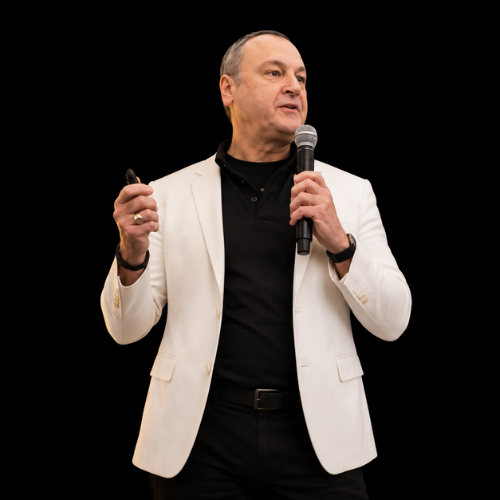
Deven Seenath
Deven Seenath is a digital entrepreneur who uses content, systems, automation, and AI to build scalable online businesses. His businesses include automated YouTube operations, an educational program focused on YouTube growth, and an AI software company. At the AI Digital Growth Summit, Deven combines two areas of expertise: generating organic attention through content and turning business knowledge into AI-powered systems that reduce dependence on the founder. His work uses AI-powered content to help businesses increase visibility, generate leads, and support long-term growth.
Speaker-Reported Business Examples
Figures reported by the speaker during the presentation; labeled internally as speaker-reported rather than independently verified.